
Introduction
In today's digital world, people spend hours on smartphones, computers, and gaming platforms. While many games are designed purely for entertainment, puzzle games stand out because they offer both fun and mental stimulation. Whether you enjoy Sudoku, crossword puzzles, jigsaw puzzles, match-three games, logic puzzles, or brain-training apps, these games challenge your mind in unique ways.
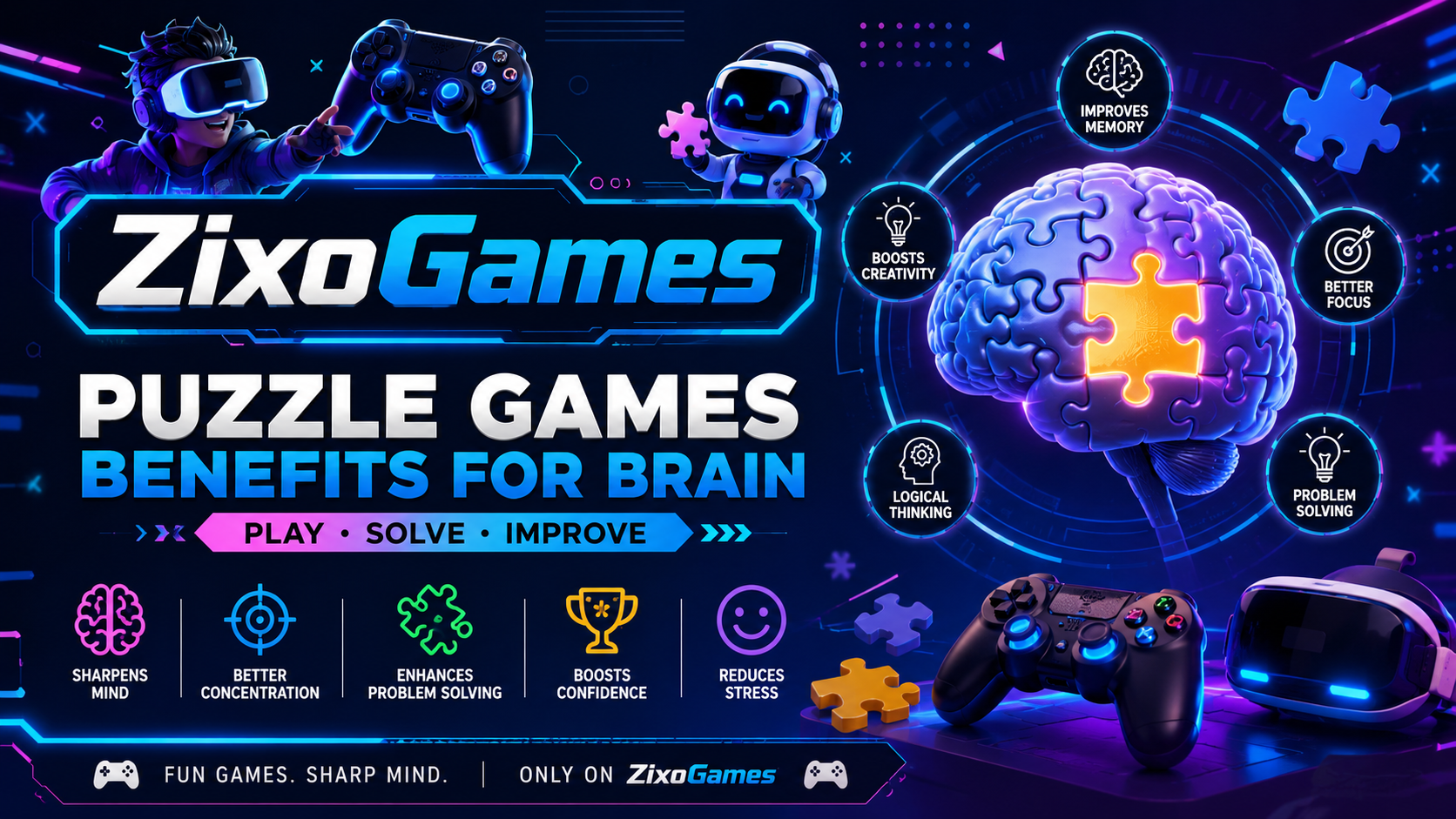
Many researchers and cognitive experts believe that puzzle games can help improve memory, concentration, logical thinking, and problem-solving abilities. Unlike passive forms of entertainment, puzzle games require active participation, forcing players to analyze situations, recognize patterns, and make strategic decisions.
In this article, we will explore the major brain benefits of puzzle games, understand how they affect cognitive function, and discover why people of all ages can benefit from playing them regularly.
What Are Puzzle Games?
Puzzle games are games that require players to solve challenges using logic, pattern recognition, critical thinking, memory, and reasoning skills.
Common Types of Puzzle Games
Puzzle Type | Examples |
|---|---|
Logic Puzzles | Sudoku, Kakuro |
Word Puzzles | Crossword, Word Search |
Matching Games | Candy Crush-style games |
Jigsaw Puzzles | Traditional and digital puzzles |
Escape Room Puzzles | Mystery and detective games |
Math Puzzles | Number-based challenges |
Strategy Puzzles | Chess puzzles, tactical games |
Unlike action games that focus on speed and reflexes, puzzle games emphasize mental effort and cognitive engagement.
How Puzzle Games Affect the Brain
The human brain works like a muscle. The more it is challenged, the stronger and more efficient it becomes. Puzzle games stimulate multiple regions of the brain simultaneously.
When solving a puzzle, the brain performs several tasks:
Processing information
Storing and retrieving memories
Identifying patterns
Making decisions
Planning future moves
Evaluating outcomes
This combination of activities creates a powerful mental workout that helps strengthen neural connections.
Improved Memory and Information Retention
How Puzzle Games Strengthen Memory
One of the biggest benefits of puzzle games is improved memory.
Many puzzle games require players to:
Remember patterns
Recall previous moves
Store information temporarily
Use long-term knowledge
For example, Sudoku players must remember number placements while planning future moves. Crossword puzzle players often retrieve vocabulary and facts stored in long-term memory.
Memory Benefits Include:
Better short-term memory
Improved working memory
Faster information recall
Enhanced learning capacity
People who regularly engage in mentally stimulating activities often find it easier to remember daily tasks and important information.
Better Focus and Concentration
Why Focus Matters
Modern life is full of distractions. Social media notifications, emails, and multitasking constantly compete for our attention.
Puzzle games train the brain to focus on a single objective for an extended period.
Benefits of Improved Concentration
Increased productivity
Better academic performance
Improved workplace efficiency
Enhanced reading comprehension
Reduced mental distractions
Many players report entering a state of "deep focus" while solving challenging puzzles, which helps strengthen attention span over time.
Enhanced Problem-Solving Skills
Learning to Think Critically
Every puzzle presents a problem that must be solved.
Players learn to:
Analyze information
Break down complex situations
Evaluate multiple solutions
Test strategies
Adapt when plans fail
These problem-solving skills extend beyond gaming and become useful in real-life situations such as education, business, and everyday decision-making.
Example
A puzzle may require several failed attempts before reaching the correct answer. This teaches patience, persistence, and analytical thinking.
Improved Logical Thinking
Logic is one of the most important cognitive skills.
Puzzle games encourage players to:
Identify relationships
Recognize patterns
Follow sequences
Make deductions
Draw conclusions based on evidence
Games such as Sudoku and logic grids are especially effective at developing logical reasoning abilities.
People who practice logical thinking regularly often make better decisions and solve challenges more efficiently.
Increased Mental Flexibility
What Is Mental Flexibility?
Mental flexibility refers to the brain's ability to adapt to changing situations and think from different perspectives.
Puzzle games often introduce:
New challenges
Unexpected obstacles
Multiple solution paths
As players adapt their strategies, they train their brains to become more flexible and creative.
Benefits
Faster adaptation to change
Improved creativity
Better decision-making
Stronger cognitive resilience
Puzzle Games Help Reduce Stress
Mental Relaxation Through Problem Solving
Many people play puzzle games to relax after a busy day.
When focused on solving a puzzle, the brain temporarily shifts attention away from stressful thoughts.
Stress Reduction Benefits
Improved mood
Reduced anxiety
Better emotional control
Increased mental calmness
Completing a challenging puzzle also releases dopamine, a neurotransmitter associated with satisfaction and reward.
This creates a positive feeling that motivates continued engagement.
Strengthening Pattern Recognition Skills
Pattern recognition is a fundamental cognitive skill used in daily life.
We use pattern recognition when:
Reading
Driving
Learning languages
Analyzing data
Making predictions
Puzzle games frequently require players to identify visual, numerical, or logical patterns.
Examples
Sudoku number arrangements
Matching game sequences
Shape-based puzzles
Color recognition challenges
Regular practice can improve the brain's ability to process information quickly and accurately.
Improved Decision-Making Abilities
Many puzzle games force players to make choices under specific constraints.
Before making a move, players often consider:
Possible outcomes
Risks
Rewards
Alternative solutions
Over time, this process helps develop stronger decision-making skills.
Real-Life Applications
Financial planning
Business decisions
Academic challenges
Personal problem solving
Better decision-making often leads to improved confidence and performance in various areas of life.
Boosting Creativity and Innovation
The Connection Between Puzzles and Creativity
Many people think puzzle games only improve logic, but they also encourage creativity.
Complex puzzles often require players to:
Think outside the box
Explore unconventional solutions
Connect unrelated ideas
Experiment with strategies
Creative thinking developed through puzzle solving can be valuable in careers involving design, technology, writing, and innovation.
Can Puzzle Games Help Prevent Cognitive Decline?
As people age, maintaining brain health becomes increasingly important.
Research suggests that mentally stimulating activities may help keep the brain active and engaged.
While puzzle games cannot completely prevent age-related cognitive decline, they may contribute to:
Maintaining mental sharpness
Supporting memory function
Encouraging lifelong learning
Keeping the brain challenged
Many healthcare professionals recommend combining mental exercises with physical activity, healthy nutrition, and adequate sleep for optimal brain health.
Benefits of Puzzle Games for Children
Children can gain significant cognitive advantages from puzzle games.
Key Benefits for Kids
Benefit | Impact |
|---|---|
Memory Development | Better learning and retention |
Problem Solving | Stronger reasoning skills |
Focus Improvement | Better classroom performance |
Creativity | Enhanced imagination |
Patience | Increased persistence |
Educational puzzle games can make learning enjoyable while developing critical thinking skills.
Benefits of Puzzle Games for Adults
Adults often face complex work and life responsibilities.
Puzzle games can provide mental stimulation that supports:
Workplace productivity
Strategic thinking
Stress management
Memory retention
Cognitive performance
Even spending 15 to 30 minutes daily on puzzle games may help keep the mind active.
Benefits of Puzzle Games for Seniors
Older adults can particularly benefit from regular mental exercise.
Potential Benefits
Improved memory
Better attention span
Increased mental engagement
Enhanced confidence
Reduced boredom
Many seniors enjoy crossword puzzles, Sudoku, and jigsaw puzzles as part of their daily routines.
Best Types of Puzzle Games for Brain Training
1. Sudoku
Excellent for logic and concentration.
2. Crossword Puzzles
Great for vocabulary and memory.
3. Jigsaw Puzzles
Improve visual-spatial skills.
4. Chess Puzzles
Strengthen strategy and planning.
5. Word Search Games
Enhance language processing abilities.
6. Escape Room Games
Develop critical thinking and teamwork skills.
7. Match-and-Connect Games
Improve pattern recognition and reaction speed.
How Often Should You Play Puzzle Games?
Experts generally recommend consistent mental stimulation rather than occasional intense sessions.
Recommended Routine
Time Per Day | Potential Benefit |
|---|---|
10 Minutes | Light mental exercise |
20 Minutes | Improved focus |
30 Minutes | Strong cognitive engagement |
45+ Minutes | Advanced challenge and practice |
Consistency matters more than duration.
Playing a few minutes every day can provide long-term benefits.
Tips for Getting Maximum Brain Benefits
Follow These Best Practices
Try different puzzle types.
Increase difficulty gradually.
Challenge yourself regularly.
Avoid relying on hints.
Play consistently.
Combine puzzles with healthy habits.
Take breaks to avoid mental fatigue.
These strategies help maximize cognitive development and maintain long-term engagement.
Common Myths About Puzzle Games
Myth 1: Puzzle Games Are Only for Children
Reality: People of all ages benefit from puzzle solving.
Myth 2: Puzzle Games Only Improve Intelligence
Reality: They improve specific cognitive skills such as memory, focus, and reasoning.
Myth 3: Difficult Puzzles Are Always Better
Reality: The best puzzles provide an appropriate level of challenge.
Myth 4: Puzzle Games Replace Learning
Reality: They complement learning but should not replace education or skill development.
Conclusion
Puzzle games are much more than simple entertainment. They provide an engaging way to challenge the brain, improve memory, strengthen concentration, enhance logical thinking, and develop valuable problem-solving skills. Whether you are a student, working professional, or senior citizen, puzzle games can offer meaningful cognitive benefits when played regularly.
By incorporating puzzle games into your daily routine, you can enjoy both fun and mental exercise while keeping your brain active and engaged. From Sudoku and crossword puzzles to modern digital brain-training games, there are countless ways to sharpen your mind and support long-term cognitive health.
The next time you pick up a puzzle game, remember that you are not just playing—you are giving your brain a valuable workout.